


Offender Locator
2.3183.00 Reviews
App Specs
- Version
- 13.0.1
- Updated On
- License
- Free
- Downloads
- 100,000+
- Developer
- Offender Locator Inc.
- Categories
- Lifestyle
- Platform
- Android
Screenshots
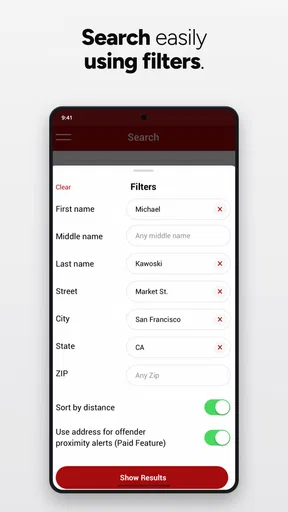
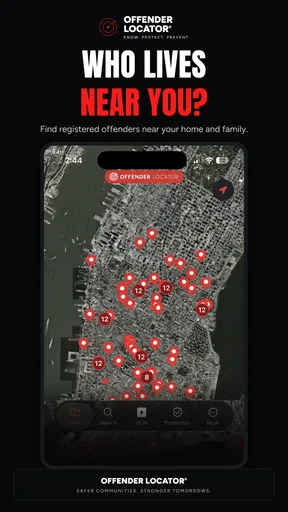
 Analysis by AppCompare
I approached Offender Locator as a practical neighborhood-awareness tool rather than a general-purpose lifestyle app. Its purpose is straightforward: it helps me look up registered sex offenders associated with my current area or with a location I choose. That can be useful when I move to a new neighborhood, plan a route, or simply want another source of public-safety information close at hand. At the same time, this is an app that demands careful interpretation. A map or search result is not a complete picture of community safety, and the information should never be used to confront, threaten, or harass anyone.
The app is free to install, although it includes optional purchases priced from $19.99 to $49.99 per item. It belongs to the Lifestyle category and comes from Offender Locator Inc. Its audience setting is Everyone, while its subject matter is clearly more serious than the rating label might suggest. I would treat it as a reference tool for adults making informed decisions, not as something to hand casually to a child.
How Offender Locator works in everyday use
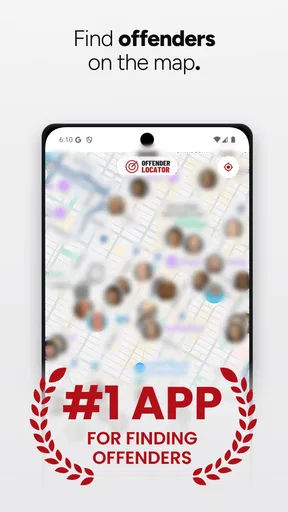
The central experience is location-based searching. I can view registered offenders connected with the area around me or select another place to inspect. That second option is especially useful because it changes the app from a “check my neighborhood” tool into something I can use before visiting a new town, comparing possible homes, or helping a family member think through a move.
The appeal is the reduced friction. Instead of searching the web repeatedly for a public registry, I have a focused mobile interface built around location. For a quick check, that is more convenient than opening several browser tabs and trying to interpret a state or local government website on a small screen. The app’s narrow purpose also makes it easier to remember what it is for: choose a location, review the available entries, and use the result as one piece of background information.
My first practical recommendation is to search more than once when a decision matters. A location pin can be useful for orientation, but it should not replace reading the underlying entry or checking the relevant official registry. Addresses can change, map positioning can be imprecise, and registration information is not the same as a live account of everything happening nearby. I would use the app to identify questions worth investigating, not to make a final judgment about a street or person from a single screen.
Useful scenarios beyond a quick neighborhood check
A realistic example would be a parent arranging a regular pickup for a child at an unfamiliar activity center. I could search the destination and nearby area before the first visit, then use the result to decide what additional questions to ask about transportation, supervision, and meeting points. The app does not answer those questions directly, but it can help me prepare instead of arriving with no context.
Another use is comparing possible rental locations. If I were choosing between two apartments, I might check both areas, note what the app presents, and then combine that information with lighting, transport, building access, local services, and conversations with people who actually know the neighborhood. That workflow is more responsible than treating the app as a simple green-or-red score.
Worth Reading Before You Choose

EA SPORTS FC Mobile 26 Is a Bigger Football Game, but It Takes Time

Flipboard Shows What News Apps Must Do Beyond the Feed

Switching to Android Auto Means Rethinking Your Driving Routine

Google Calendar Makes a Crowded Week Easier to Manage

Ludo King Makes the Most of the Minutes Between Plans

Baby Panda World Brings Quick Play to Modern Phones, but Its Game Library Feels Busy
Travel planning is a third use. Before staying in an unfamiliar place, I could inspect the surrounding area and save time by focusing my broader research. The important trade-off is that this is a location lookup, not a personal security service. It does not turn a phone into a warning system, replace common-sense precautions, or guarantee that every relevant incident will appear in the same way.
What the current version says about the product’s direction
The current version is 13.0.1, and the app has been available since October 26, 2017. That history suggests a product that has had time to evolve beyond its original release, but I would not confuse a higher version number with proof that every modern expectation has been addressed. The meaningful question for me is whether the present experience makes location research clear, careful, and dependable enough for the decisions people may attach to it.
Existing users should approach an update with practical expectations. A newer version can improve compatibility or refine the way the app presents its core lookup experience, yet the basic responsibility remains unchanged: verify important details through authoritative sources and avoid drawing conclusions from proximity alone. In an app dealing with sensitive records, clarity matters more than visual novelty.
The developer is Offender Locator Inc., and the app has passed the threshold of over one hundred thousand installs. Its average rating is 2.3 from several hundred ratings, with more than one hundred written reviews. I see that rating as a reason to test the app carefully rather than dismissing it immediately. A low average can reflect problems with usability, expectations, data interpretation, or the gap between what people want from a safety tool and what a registry viewer can realistically provide.
Where the experience can become frustrating
The biggest limitation is the emotional weight of the information. A user may see a nearby result and instinctively treat it as an immediate threat. That reaction is understandable, but the app itself should be used with restraint. Registration records can involve different circumstances, levels of risk, and legal requirements. Distance on a map does not explain those differences, and a search result does not provide enough context to judge a person’s current behavior.
I also would not rely on the app as my only source when the decision is important. Official government registries and local authorities are better choices when I need the most authoritative record, legal definitions, or instructions for reporting an actual concern. A browser search may be slower, but it can provide more surrounding explanation. Offender Locator is more convenient for a first pass; the usual alternative is often stronger for verification and context.
There is also a financial point to consider. The app is free, but optional in-app purchases range from $19.99 to $49.99 per item. Before paying, I would make sure the added value is clear to me and that I understand whether the purchase improves convenience, access, or another part of the lookup experience. For occasional checks, a free installation may be enough. For frequent research, the cost deserves more scrutiny because official public resources may still be necessary regardless of any paid option.
Small habits that make the results more useful
I would begin with a broad area, then narrow my attention to the exact destination rather than searching only one street address. This reduces the chance of mistaking a pin for a complete neighborhood picture. After that, I would record the date of my check for my own reference and repeat it later if the information affects a move or recurring visit. That is a simple habit, but it prevents an old screenshot or memory from becoming the basis for a current decision.
I would also separate three questions that are easy to mix together: what the registry shows, what the location means for my plans, and what practical precautions make sense. The first is a lookup task. The second requires judgment. The third may involve lighting, trusted contacts, supervised travel, secure entrances, or speaking with local organizations. Keeping those questions separate makes the app more useful and reduces the risk of overreacting to a single entry.
For family use, I would explain the app before opening it. Children may interpret a map marker literally and become frightened, while adults may assume that a result tells them more than it really does. I would rather use the app as a starting point for age-appropriate safety conversations than present it as a definitive map of dangerous and safe places.
Shared devices need clear boundaries
On a household phone or tablet, I would decide in advance who is meant to use the app and what a search is for. That is not because a shared device changes the lookup itself; it is because a search about a sensitive public record can be misunderstood when someone opens it without context. I would avoid leaving a results screen open for a child to discover, and I would explain that the app is for adult research, not a way to label neighbors or classmates.
If more than one adult is coordinating a move or visit, I would share the conclusion and the official source checked, rather than forwarding a map image without explanation. A screenshot can lose the location context and the date of the search, and it can make a tentative result look definitive. Keeping a short note of the place checked and the question still to verify is more useful than circulating an unexplained pin.
This is also where the app’s limits as a household tool matter. I would not assume it provides family profiles, shared alerts, or parental controls. The practical boundary comes from how the household handles the device and talks about the information. If relatives need coordinated safety planning, a direct conversation and verified local resources are a better foundation than expecting one lookup app to manage that process.
Who should use it, and who should skip it?
Offender Locator is best suited to adults who want a convenient first look at registry information tied to a current or selected location. It can be worthwhile for someone moving, traveling, comparing neighborhoods, or preparing questions before arranging regular visits to an unfamiliar place. The location-selection option is particularly helpful for planning ahead instead of waiting until I am physically there.
I would skip it if I need emergency assistance, live incident alerts, professional risk assessment, or a complete neighborhood-safety report. It is also the wrong choice for anyone looking for permission to confront a listed individual or publish personal information. The responsible use case is private research followed by verification, not public accusation.
People who already trust official registry websites may prefer staying with those sources. A website can offer more legal context and may be the better option when I need to understand registration rules or confirm a record for a serious housing or legal decision. The app’s advantage is convenience and mobility, not automatic authority over every other source.
Age, trust, and the meaning of a result
The Everyone content rating describes the app’s audience setting, but I would not use that label as a substitute for a family’s own judgment about the subject matter. A registry search can raise difficult questions, and the map format may make a complex legal record look simpler than it is. For younger users, I would choose an adult-led conversation about personal boundaries and safe routines instead of handing over the app as an independent guide.
When a result appears close to a home, school, or regular destination, I would resist turning that proximity into a claim about what will happen there. The more useful question is what practical decision I am trying to make, and whether this record actually helps answer it. If it does not, I would move to better-suited information rather than searching repeatedly for reassurance. Rechecking the same result without a clear question can increase anxiety without adding understanding.
Trust also means being careful about what I share. I would not post a result in a neighborhood group or send it around as a warning without checking the original record and considering privacy and legal implications. The app may make a lookup quick, but responsible interpretation still takes time. For a genuine immediate concern, I would contact the appropriate local authority rather than treating a registry screen as an incident-reporting channel.
What I would watch as the app continues to evolve
For future updates, I would pay attention to how clearly the app explains results, how easily users can distinguish a location estimate from a verified address, and whether the interface encourages responsible interpretation. Those improvements would matter more to me than cosmetic changes. In a sensitive category, a well-explained result is more valuable than a crowded screen or a dramatic warning.
I would also watch how the current version behaves across supported devices. It requires Android 8.0 or later, so anyone using an older phone should check compatibility before planning around it. Users on supported devices should still judge the app by the reliability and clarity of the actual lookup experience, especially because the modest average rating indicates that the practical experience has not satisfied everyone.
The app’s long availability and substantial install base show that there is continuing interest in a mobile way to inspect registry information. That does not remove the need for caution. Product evolution should ideally make the workflow clearer, reduce misunderstandings, and help users move from a search result to sensible next steps without encouraging fear or vigilantism.
My final take
I find Offender Locator useful in a limited but real role. It makes a location-based check more convenient than starting from scratch on the web, and the ability to choose an area away from my current position gives it practical value for moving and travel planning. The free entry point also makes it easy to test whether the workflow fits my needs before considering any optional purchase.
Still, I would not make it the deciding authority for a home, a route, or a person. The low average rating tells me to keep expectations measured, while the sensitive subject matter makes careful interpretation essential. My preferred workflow is to use the app for orientation, verify important records through official sources, and then consider ordinary safety factors that no registry map can measure.
My recommendation is cautious rather than enthusiastic: try it if you want a mobile starting point for location research, but skip it if you expect live protection, complete context, or a definitive safety score. Used as one research step—and never as a reason to harass or target anyone—it can be practical. Used as the whole answer, it is not enough.
Pros
- Helps users check offender information by location.
- Simple interface makes searches quick for most users.
- Useful for increasing awareness around nearby registered offenders.
- Location-based results can support personal safety planning.
- May help families discuss safety and supervision more effectively.
Cons
- Information may be incomplete or outdated between official updates.
- Results depend on location permissions and accurate address data.
- Listings can cause unnecessary fear without proper context.
- Coverage and features may vary by state or region.
- Should not be used to confront or harass listed individuals.
FAQs for Offender Locator
What is Offender Locator and what information does it provide?
Offender Locator is designed to help users search for publicly available offender information, usually by using a name, location, or map-based search. Depending on the jurisdiction and database coverage, results may include an individual’s listed address, photograph, identifying details, offense information, and registration status. The exact data available can vary considerably by region and should always be checked against the relevant official government source.
Is the information in Offender Locator accurate and up to date?
The app’s results depend on the public records and official databases that supply its information. While listings may be updated periodically, there can be delays, incomplete records, spelling differences, or changes that have not yet appeared in the search results. During testing and regular use, it is best to treat the app as a convenient lookup tool rather than an authoritative legal record, and verify important details with the appropriate official agency.
Does Offender Locator work everywhere, or is it limited to certain areas?
Offender Locator may not provide identical coverage in every country, state, or local jurisdiction. Its usefulness depends on whether the area publishes compatible public records and whether those records are supported by the app. Before downloading, users should check the app’s description, supported locations, and recent reviews. Searches outside supported regions may return limited results, no results, or information that is less detailed than expected.
Does Offender Locator require payment, registration, or an internet connection?
Requirements can vary according to the version of the app and the platform where it is downloaded. Some features may be free, while advanced searches, expanded records, advertising removal, or other tools could require an in-app purchase or subscription. Searches generally need an internet connection because the app retrieves current database information online. Review the store listing and permission requests carefully so you understand any costs and account requirements before using it.
What privacy and responsible-use issues should I consider before using the app?
Because Offender Locator deals with sensitive personal and location-related information, users should read its privacy policy and review the permissions requested during installation. Avoid sharing search results publicly, using the information to threaten or harass anyone, or assuming that a listing proves current behavior or guilt beyond the official record. The app should be used for lawful, safety-focused purposes, with respect for privacy and all applicable local regulations.


